

Table of Contents
What is alopecia?
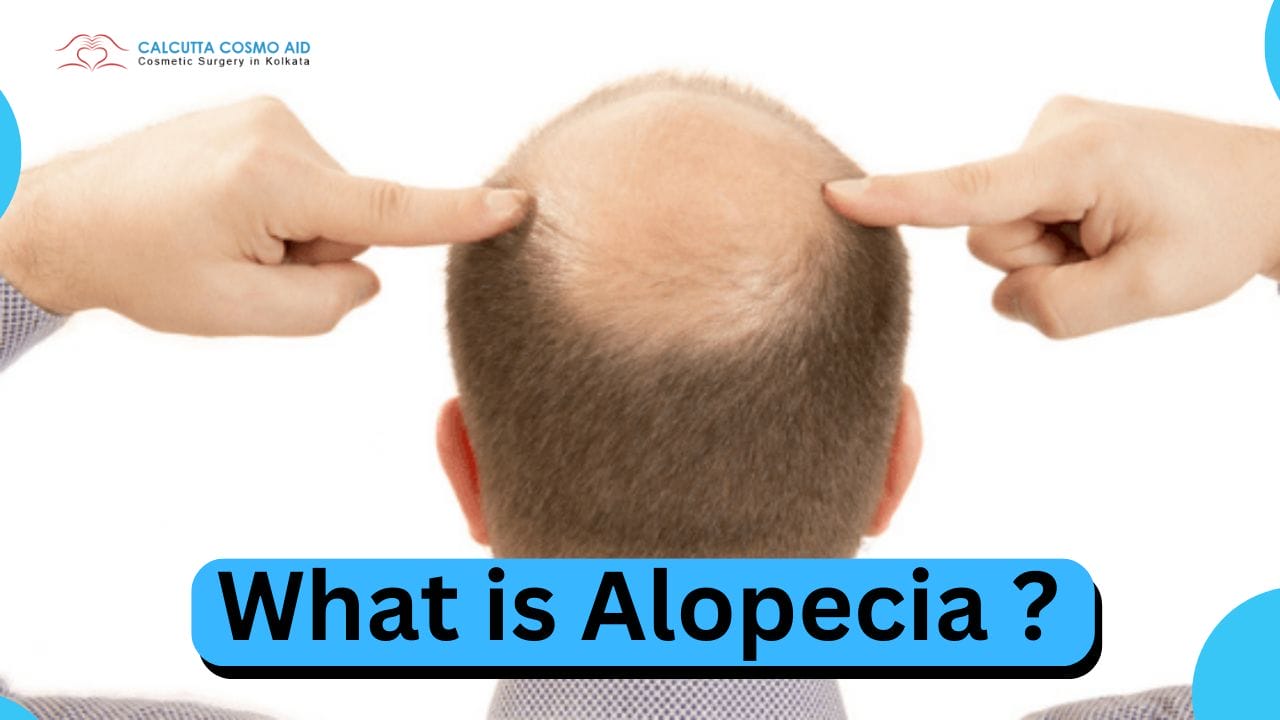
Alopecia is the medical term for hair loss. Hair loss may occur naturally or it may be related to disease or the use of certain medications. Symptoms of alopecia vary depending on the cause of the condition and range from a small bald patch to a complete loss of all body hair.
Types of Alopecia

Alopecia Areata
Alopecia Areata is thought to be an autoimmune condition, which often starts with isolated patches of hair loss, commonly in one or more coin-sized (usually round or oval) patches on the scalp and/or across the body including the beard, eyebrows, eyelashes or body hair, including pubic hair.
There are different types of this condition. Alopecia areata is most common in its main form, but there are other, more rare types:
- Alopecia areata totalis means you’ve lost all the hair on your head.
- Alopecia areata universalis is the loss of hair over your entire body.
- Diffuse alopecia areata is a sudden thinning of your hair rather than lost patches.
- Ophiasis alopecia areata causes hair loss in a band shape around the sides and back of your head.
- Alopecia Barbae which affects the beard and moustache.


Alopecia Barbae can occur only in the beard area, but can also happen alongside hair loss in other areas, such as the scalp.
Androgenetic Alopecia is often referred to as ‘Male Pattern Hair Loss’ or ‘Female Pattern Hair Loss’. It is the most common type of hair loss, affecting approximately 50% of men over the age of 50 and around 50% of women over the age of 65. Androgenetic Alopecia can also affect younger men and women.
Central Centrifugal Cicatricial Alopecia(Scarring Alopecia)
Central Centrifugal Cicatricial Alopecia (CCCA) is a form of scarring alopecia, which starts in the center of the scalp. CCCA is most common in women of African descent, but it can also affect men and women of any ethnicity.
Chemotherapy Induced Alopecia (Anagen Effluvium)
Chemotherapy-Induced Alopecia (CIA) is when the hair falls out following chemotherapy. It is one of the most visibly distressing side effects of commonly administered chemotherapeutic drugs.
Frontal Fibrosing Alopecia (Scarring Alopecia)
Frontal Fibrosing Alopecia (FFA) is a type of Scarring Alopecia, where the hair follicle is destroyed and replaced with scar tissue. In Frontal Fibrosing Alopecia, hair falls out across the front of the scalp. Hair loss can also affect the eyebrows.
Lichen Planopilaris (Scarring Alopecia)
Primary Scarring Alopecias (also known as cicatricial alopecias or scarring hair loss) are a group of conditions that destroy the hair follicle, replace it with scar tissue, and cause permanent hair loss. In Lichen Planopilaris, patches of scalp appear, most commonly on the sides, front and lower back of the scalp.
Telogen Effluvium
With Telogen Effluvium more hairs than usual move into the telogen (resting) phase and shed, so you may notice more hair falling out than usual. Telogen Effluvium is often caused by a physical or psychological trigger and often resolves itself spontaneously.
Traction Alopecia (Hair Loss)
Traction Alopecia is when hair falls out because it has been pulled in the same way for a long time. This condition is often caused by tight hairstyles, relaxers or extensions.
Trichotillomania (Hair Pulling)
Trichotillomania is a psychological condition, where you cannot stop pulling out hair, which leads to hair loss. The most common places that people pull hair from are the scalp, eyebrows, and eyelashes.
Most common type of Alopecia :
ANDROGENETIC ALOPECIA
- Also known as “male pattern baldness” and “female pattern baldenss”.
Causes of Alopecia

Hair loss is typically related to one or more of the following factors:
- Family history (heredity). The most common cause of hair loss is a hereditary condition that happens with aging. This condition is called androgenic alopecia, male-pattern baldness and female-pattern baldness. It usually occurs gradually and in predictable patterns — a receding hairline and bald spots in men and thinning hair along the crown of the scalp in women.
- Hormonal changes and medical conditions. A variety of conditions can cause permanent or temporary hair loss, including hormonal changes due to pregnancy, childbirth, menopause and thyroid problems. Medical conditions include alopecia areata (al-o-PEE-she-uh ar-e-A-tuh), which is immune system related and causes patchy hair loss, scalp infections such as ringworm, and a hair-pulling disorder called trichotillomania (trik-o-til-o-MAY-nee-uh).
- Medications and supplements. Hair loss can be a side effect of certain drugs, such as those used for cancer, arthritis, depression, heart problems, gout and high blood pressure.
- Radiation therapy to the head. The hair may not grow back the same as it was before.
- A very stressful event. Many people experience a general thinning of hair several months after a physical or emotional shock. This type of hair loss is temporary.
- Hairstyles and treatments. Excessive hairstyling or hairstyles that pull your hair tight, such as pigtails or cornrows, can cause a type of hair loss called traction alopecia. Hot-oil hair treatments and permanents also can cause hair to fall out. If scarring occurs, hair loss could be permanent.
According to Dr. Anand. K. Nagwani, health conditions may be a cause of baldness when a rash, redness, pain, peeling of the scalp, hair breakage, patchy hair loss, or an unusual pattern of hair loss accompanies the hair loss. A skin biopsy and blood tests also may be necessary to diagnose disorders responsible for hair loss.
How is alopecia treated?

Alopecia cannot be cured; however, it can be treated and the hair can grow back.
In many cases, alopecia is treated with drugs that are used for other conditions. Treatment options for alopecia areata include:
- Corticosteroids: Anti-inflammatory drugs that are prescribed for autoimmune diseases. Corticosteroids can be given as an injection into the scalp or other areas, orally (as a pill), or applied topically (rubbed into the skin) as an ointment, cream, or foam. Response to therapy may be gradual.
- Rogaine ® (minoxidil): this topical drug is already used as a treatment for pattern baldness. It usually takes about 12 weeks of treatment with Rogaine before hair begins to grow.
Other drugs that are used for alopecia with varying degrees of effectiveness include medications used to treat psoriasis and topical sensitizers (drugs that are applied to the skin and cause an allergic reaction that can cause hair growth).
Alopecia areata may be treated with steroids or immunotherapy. The immunotherapy entails deliberately inducing an allergic response that triggers the growth of hair in bald areas.
Alopecia may also be treated using surgical methods such as hair transplant or implants. Alternatively, a person may decide to use a wig, which may be synthetic or made of real hair.
Hair transplant is a procedure that is mainly used to treat male-pattern baldness. Hair follicles are taken from the back of the head and transplanted into a bald area.
Types of hair Transplants:
- FUT (Follicular unit transplantation)
- FUE ( Follicular unit extraction)
FUT (Follicular Unit Transplantation)
In FUT the surgeon removes a linear strip of your scalp from the donor region. The strip is then split into sections and prepped for implantation into the thinning or balding areas.
With FUT, there’s no need to shave the donor area, but patients do have one long scar across their scalp. For these reasons, FUT is sometimes preferred for patients with longer hair (which can cover the scar) and who don’t want a drastic change in their appearance.

FUE (Follicular Unit Extraction)
In an FUE hair transplant, each follicular unit is extracted from your scalp from the donor area. Dr. Anand K Nagwani chooses harvested hair from different parts of the donor area, so there isn’t any noticeable thinning.
These follicles are prepped for implantation then transplanted into the areas of your scalp with thinning hair or baldness. Patients do need to shave the area of the scalp receiving the donor hair follicles.
The procedure doesn’t leave visible scarring, making it ideal for patients who wear or may want to wear shorter hairstyles. You can expect some redness and soreness, but generally, patients report very little pain after treatment.
BEST HAIR TRANSPLANT CLINIC IN KOLKATA
Calcutta Cosmo Aid Hospital offers consultancy services, cosmetic correction with laser and surgical procedures with true professionalism and passion.
The hospital is special in itself with both indoor and outdoor treatment facilities. This gives patients the ease they look for. Cosmo Aid reflects a special bond with patient’s feeling and treat them with humanitarian touch. Doctors and the support staff are well trained and facilitated with state-of-the-art infrastructure to ensure successful treatment to the patients at their ease and also take care of their satisfaction.
Cosmo Aid Hospital is well-equipped with two operation theatres and five super-speciality lasers. Dr. Anand Kumar Nagwani, the Chief Surgeon, along with Dr. Janki Nagwani are the soul of the hospital, who are assisted by a few other doctors. This highly qualified team, with loads of experience, provides their patient with the kind of treatment they look for.
The hospital provides individual attention to the patient and the most important thing which becomes the basis of any hair transplantation is to identify the actual cause of hair loss, making it the sole reason as to why patients should feel confident for getting a treatment at Cosmo Aid Hospital.
The hospital is located on Harish Mukherjee Road, very close to SKM Hospital /Shambhu Nath Pandit Street intersection. You will appreciate our beautifully appointed furnishings, state-of-the-art technology and techniques, and warm & friendly staff, and uncommonly pleasant experience.


