

Table of Contents
Introduction
Hair loss, the perennial woe affecting men of all ages and backgrounds, can be perplexing when its cause remains elusive. In such cases, a Scalp Biopsy emerges as a valuable diagnostic tool. This procedure, while initially daunting, is a swift and generally painless process that can provide crucial insights into the root cause of hair loss. In this comprehensive guide, we’ll delve into the intricacies of Scalp Biopsy, exploring what it is, when it’s necessary, the process involved, and its role in diagnosing various forms of hair loss.
What Is a Scalp Biopsy?
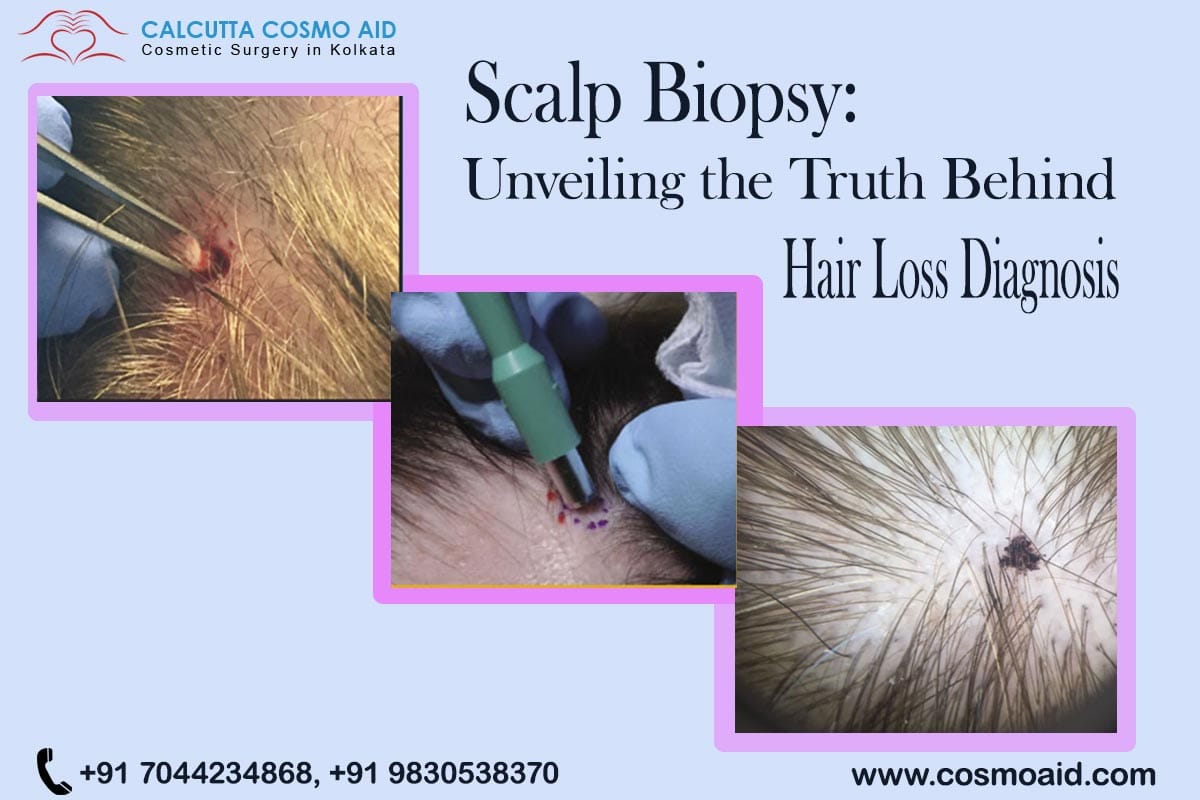
A Scalp Biopsy is a minor medical procedure wherein a small piece of skin is extracted from the scalp for thorough testing and analysis. This process differs from trichoscopy, as it involves obtaining a skin sample rather than examining hair follicles under a microscope. The biopsy can be performed using various techniques, such as punch biopsy, shave biopsy, or excisional biopsy, each offering specific advantages in detecting different scalp conditions.
The primary purpose of a Scalp Biopsies is to facilitate an accurate diagnosis of diseases or conditions affecting the scalp. For conditions like androgenetic alopecia, the biopsy aids in identifying signs of follicle destruction or conducting a follicular count. Additionally, it can reveal indicators of hair damage due to autoimmune conditions or scalp disorders.
When Is a Scalp Biopsy Necessary?
Your healthcare provider may recommend a Scalp Biopsy when experiencing unexplained hair loss. The procedure serves various purposes, including:
Identification of Hair Follicle Damage: To investigate signs of damage that may elucidate hair loss.
Detection of Infections or Skin Conditions: To identify infections or skin conditions affecting the scalp and hair.
Inflammation Analysis: To detect inflammation that could be treated to halt or slow down hair loss.
Understanding Hair Recovery Potential: To comprehend the feasibility of hair recovery or regrowth.
In cases where unusual moles or skin growths are present on the scalp, a biopsy becomes crucial in determining whether further attention is required.
Diagnosing Hair Loss Through Scalp Biopsy
Various forms of hair loss can be diagnosed through a Scalp Biopsies, including:
Male Pattern Baldness (Androgenetic Alopecia): Caused by genetic factors and DHT effects.
Cicatricial Alopecia (Scarring Alopecia): Involves damage to hair follicles due to scar tissue.
Telogen Effluvium: Temporary shedding triggered by factors like stress, fever, surgery.
Alopecia Areata: Non-scarring, patchy hair loss linked to autoimmune response.
Dermatophyte-Induced Alopecia (Tinea Capitis): Hair loss caused by scalp ringworm.
Trichotillomania: Hair loss from compulsive hair pulling, often linked to mood disorders.
The Scalp Biopsy Process
Despite initial apprehensions, the Scalp Biopsy process is typically quick and simple. Your healthcare provider will clean the scalp area, use a special device to extract a small skin sample, and may use local anesthetic to minimize discomfort. The extracted sample is then analyzed in horizontal or vertical sections to provide a detailed understanding of the scalp condition.
Post-biopsy, follow your healthcare provider’s care instructions diligently to prevent infection and promote efficient skin recovery. Contingent upon the biopsy strategy, the region might be stitched shut.
Other Techniques for Diagnosing Hair Loss
While Scalp Biopsies is a valuable tool, not all forms of hair loss require it. Your healthcare provider may use other approaches, including:
Physical Examination: Assessing hair loss through a visual examination.
Symptom Discussion: Inquiring about the nature and onset of hair loss symptoms.
Hair Pull and Pluck Tests: Evaluating hair loss by pulling or plucking hairs.
Trichogram: Analyzing extracted hair for specific characteristics.
Bacterial/Fungal Culture Test: Conducted for suspected infections, such as tinea capitis.
How to Treat Hair Loss
Most types of going bald are treatable, either using going bald drugs, by treating the fundamental reason or by making changes to your hair care propensities.
Contingent upon the fundamental reason for your balding, your medical services supplier might suggest at least one of the accompanying balding therapy choices.
Use Finasteride and Minoxidil
These FDA-approved medications combat male pattern baldness effectively.
Studies show their synergy in preventing hair loss and stimulating growth.
Available online with a prescription, or in combination through the Hair Power Pack.
Treat Underlying Conditions:
Address the root cause, be it stress, infection, or inflammation, before focusing on hair regrowth.
Medication and lifestyle changes may be prescribed based on biopsy results.
Adjust Hair Care Habits:
Optimize hair care with products like Hair Thickening Shampoo and Thick Fix Conditioner.
Dietary changes can contribute to overall hair health.
While lifestyle changes may not reverse male pattern baldness independently, they can complement science-based treatments like finasteride and minoxidil.
Do You Need a Scalp Biopsy?
If experiencing unexplained hair loss or facing uncertainties about scalp health, a Scalp Biopsies can provide clarity. The procedure, usually taking only a few minutes, offers valuable insights that guide appropriate treatment options. Following your healthcare provider’s advice post-biopsy is crucial for a speedy recovery.
Conclusion
In conclusion, a Scalp Biopsy is a crucial diagnostic tool that can unravel the mystery behind hair loss. Understanding its process, significance, and when it’s necessary empowers individuals to make informed decisions about their scalp health. If faced with persistent hair loss concerns, consulting with a healthcare professional, such as Dr. Nagwani, can pave the way for an accurate diagnosis and tailored treatment plan. Explore our detailed guide on the most common scalp conditions for additional insights into maintaining optimal scalp health.
Frequently Asked Questions (FAQs)
Q1: What is a Scalp Biopsy, and how does it differ from other diagnostic methods for hair loss?
A Scalp Biopsy is a minor medical procedure where a small piece of skin is extracted from the scalp for testing. It differs from trichoscopy, which examines hair follicles under a microscope.
Q2: When is a Scalp Biopsy necessary for diagnosing hair loss?
If you’re experiencing hair loss without a clear cause, a healthcare provider may recommend a Scalp Biopsy to identify signs of follicle damage, infections, inflammation, or autoimmune conditions.
Q3: How is the Scalp Biopsy process conducted?
The procedure is quick and usually painless. Your healthcare provider cleans the scalp, extracts a small skin sample using a special device, and may use local anesthesia. The sample is then analyzed to provide insights into the scalp condition.
Q4: What can a Scalp Biopsy diagnose, and for which hair loss conditions is it helpful?
A Scalp Biopsy can diagnose various conditions, including male pattern baldness, cicatricial alopecia, telogen effluvium, alopecia areata, dermatophyte-induced alopecia, and trichotillomania.
Q5: Are there alternatives to Scalp Biopsy for diagnosing hair loss?
Yes, other diagnostic methods include physical examination, symptom discussion, hair pull and pluck tests, trichogram, and bacterial/fungal culture tests. The choice depends on the nature of the hair loss symptoms.


